Select your language

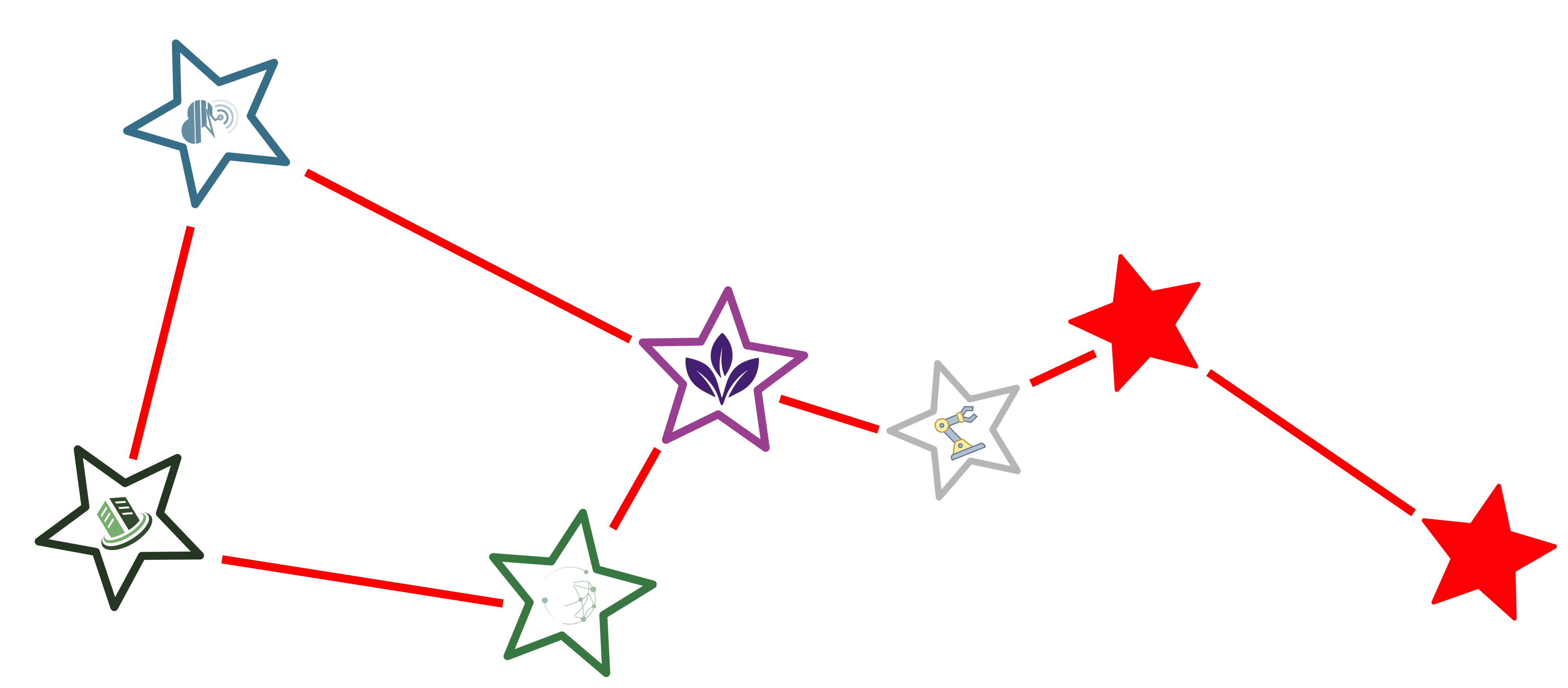
red constellation stars

TURNING COMPLEXITY INTO VALUE


Business Agility is a key objective for many organizations, regardless of their industry and markets, and we can say the same for Antifragility. To achieve such objectives, the development of an Agile mindset, along with an adequate set of contextualized practices, is surely the best course of action that an organization should consider and experiment with.

It is important to avoid the trap of considering Agile useful only for software development. Despite the common belief, the roots of Agile are in non-software companies, as highlighted in 1986 Harvard paper "The New New Product Development Game” by Hirotaka Takeuchi and Ikujiro Nonaka.

In relation to these premises, AgileConstellation was born, an open-agora to collect the experiences of declination of Agile and Lean in contexts characterized by products and solutions that impact multiple disciplines and specific engineering domains.

The goal is to overcome typical problems of parallel development that are integrated only at the end of development, so called Big Bang Integration. This type of integration generates several critical problems:

  • development efficiency is heavily penalized, as teams do not continually communicate between them, do not share know-how, nor strength or weakness elements.
  • problems emerge only late in the development cycle, where fixing has high costs, especially for hardware components.
  • the resulting solution is, often, a low-quality compromise, driven by time constraints suffering from workarounds where components do not integrate perfectly.

The actula Agile Constellation domains are just a few influenced by Business Agility today. Business Agility impacts more than processes or frameworks, it changes the concept of flexibility and enhances organizational survival abilities.It is crucial to emphasize that there is no single path towards Business Agility: it is a journey and the first step is the most difficult to take.

AdaptivePDM

The AdaptivePDM is designed to effectively implement product-oriented development, focusing the action on an iterative workflow divided into three phases: Define, Design and Deliver. 

haikai apdm lotus

  • The Define phase  is critical to building a successful product, as it establishes context, gathers key insights, and defines the problem to be solved with clear metrics. Without in-depth work at this stage, there is a risk of developing a solution that does not meet the real needs of users or that does not have an adequate market.

  • The Design phase  focuses on generating solutions and their initial validation. This phase is crucial for exploring innovative approaches, prototyping quickly and testing ideas before investing resources in full development.
  • The Deliver phase  focuses on the creation of the product and its optimization based on testing and feedback.

Each of these steps plays a key role in ensuring that the product is developed strategically, starting from understanding the problem to its realization and optimization.

The product-oriented approach allows you to reduce the risk of failure, validate ideas before developing them and create more effective and usable products. This iterative process ensures that the final product truly meets the needs of users.

The different phases are divided into specific subphases that make use of special methodological tools, not necessarily exclusive, as shown in the following map:
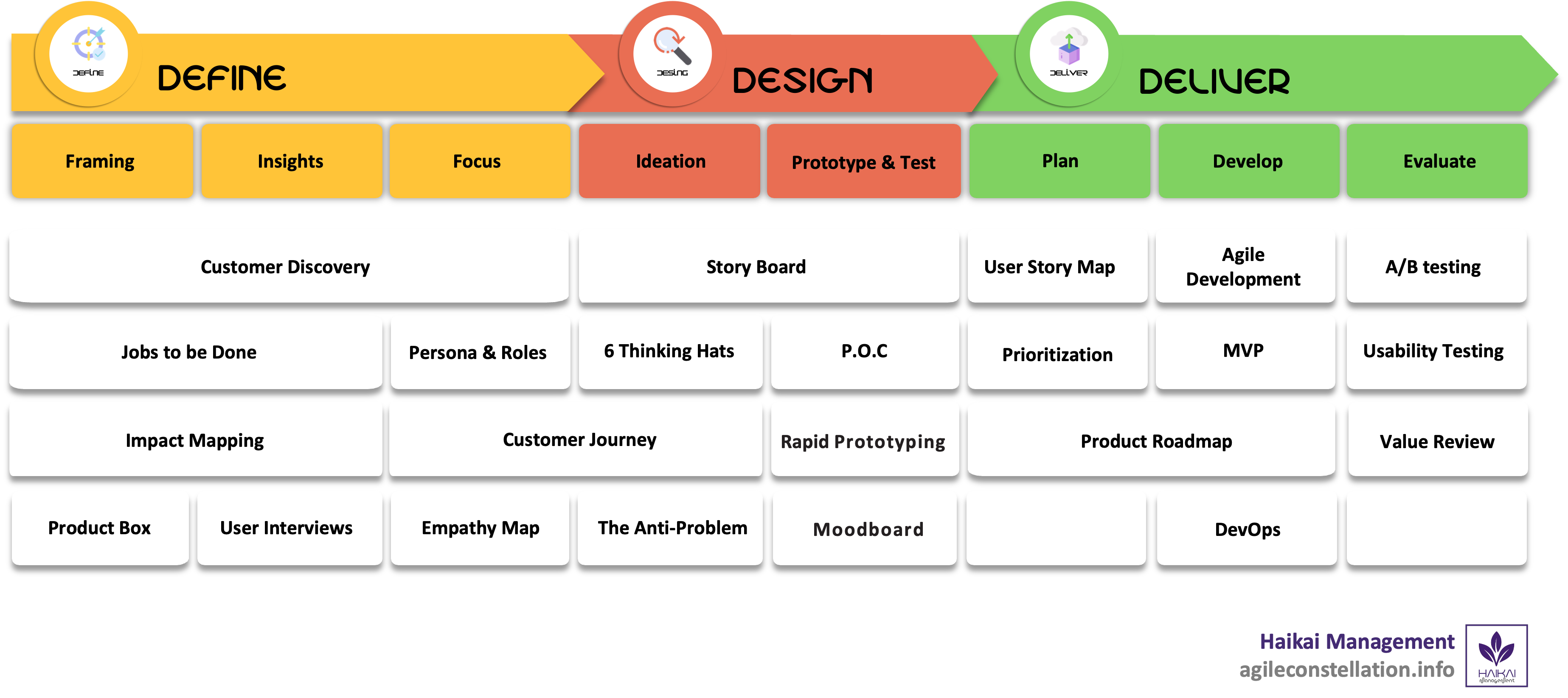
haikai apdm tools map

Regardless of its industry, a company can always try to be more flexible and better than it was yesterday
..:: Adaptability is essential to survival in a changing environment ::..
Free Joomla templates by Ltheme